⭐⭐⭐⭐⭐Anti-colic baby bottles are a vital tool for parents who want to ensure their newborn enjoys a comfortable, tear-free feeding experience. These specialized bottles utilize advanced venting systems to prevent air from mixing with milk, which effectively reduces gas, painful pressure, and spit-up. In 2026, the market has seen a significant shift toward medical-grade materials like glass and PPSU to guarantee the highest safety for your infant. Whether you are transitioning from the breast or dealing with a fussy eater, the right bottle design can drastically improve your baby’s digestive health.
Quick Summary
- Clinically Proven Choice: Dr. Brown’s Natural Flow uses an internal vent to eliminate air bubbles entirely.
- Premium Glass Option: Philips Avent Natural Glass provides thermal shock resistance and a breast-like feel.
- Breastfeeding Transition: Thyseed PPSU features a unique 120-degree latch design to mimic natural nursing.
- Safe and Non-Toxic: Every bottle on this list is BPA-free and uses high-quality food-grade silicone.
- Adaptive Designs: Modern systems allow you to remove the anti-colic vent as your baby’s digestion matures.
Introduction
Selecting the most effective anti-colic baby bottles is a priority for new parents navigating the early months of infant care. Because a newborn’s digestive system is incredibly delicate, swallowing even small amounts of air can lead to hours of crying and discomfort. Transitioning between breastfeeding and bottle feeding also requires a nipple that mimics a natural rhythm to avoid “nipple confusion.” Fortunately, the latest innovations for 2026 have perfected vacuum-free feeding technology. We have thoroughly reviewed the top performers to help you choose a bottle that keeps air out of your baby’s tummy while making feeding time a peaceful bonding experience.
1. Dr. Brown’s Natural Flow Anti-Colic Options+
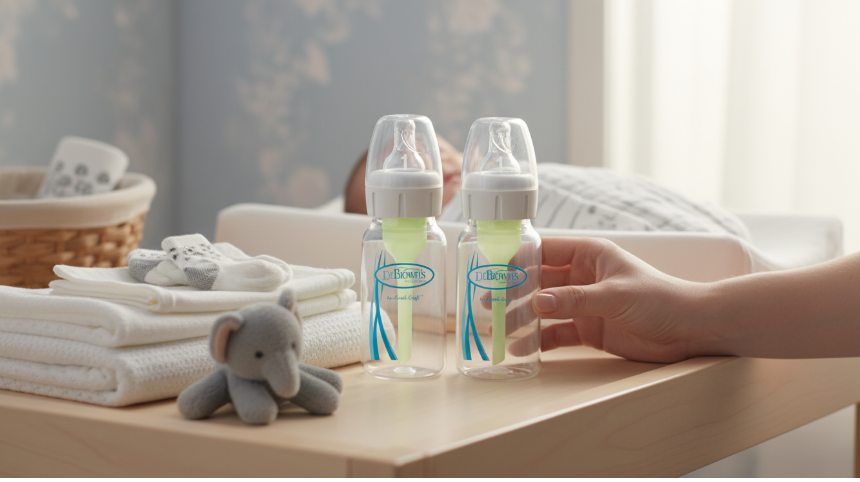
Best Overall for Extreme Gas Relief
Dr. Brown’s has remained a leader in anti-colic baby bottles because of their commitment to vacuum-free feeding. The Options+ series includes a green internal vent system that ensures no air bubbles mix with the milk during the feed.
Short Verdict: The most reliable bottle for infants suffering from severe reflux or painful gas.
Key Features:
- Clinically proven internal vent system reduces colic and burping.
- Helps preserve essential milk nutrients like Vitamins A, C, and E.
- Features a Level 1 slow-flow nipple specifically for newborns.
- The internal vent can be removed as the baby’s feeding develops.
| Pros | Cons |
| Superior air-to-milk separation | Requires cleaning the internal vent parts |
| Prevents nipple collapse during feeding | Narrow neck requires a specific brush |
| Trusted by pediatricians worldwide |
Who Should Buy: Parents whose babies are experiencing significant digestive distress and need a medically-backed solution to stop gas before it starts.
Real-Life Practical Insight:
While cleaning the extra vent parts takes a few more minutes, the peace of mind is worth it. My baby stopped having those “purple-crying” fits after we made the switch to this system.
2. Philips Avent Natural Glass Baby Bottles

Best Eco-Friendly Anti-Colic Baby Bottles
The Philips Avent Natural Glass bottles are a premium alternative for parents who prefer the purity of glass. These anti-colic baby bottles use borosilicate glass, which is incredibly durable and resistant to extreme temperature changes.
Short Verdict: A high-quality, easy-to-assemble glass bottle that mimics the natural breastfeeding rhythm.
Key Features:
- Natural Response nipple releases milk only when the baby is actively drinking.
- Heat and thermal shock resistant for safe warming and sterilization.
- Wide breast-shaped nipple promotes a natural latch for combined feeding.
- Integrated anti-colic valve sends air away from the baby’s stomach.
| Pros | Cons |
| Glass is naturally BPA-free and stain-resistant | Heavier for older babies to hold alone |
| No-drip nipple prevents milk waste | Can break if dropped on hard surfaces |
| Simple assembly with only four parts |
Who Should Buy: Environmentally conscious parents who want a hygienic, long-lasting bottle that supports a breastfeeding baby’s natural drinking pace.
Real-Life Practical Insight:
The “No-Drip” feature is incredibly effective. You can tip the bottle upside down and it won’t leak a single drop until your baby starts to suck, which saves quite a bit of spilled milk.
3. Thyseed PPSU Natural Breast-Like Bottle
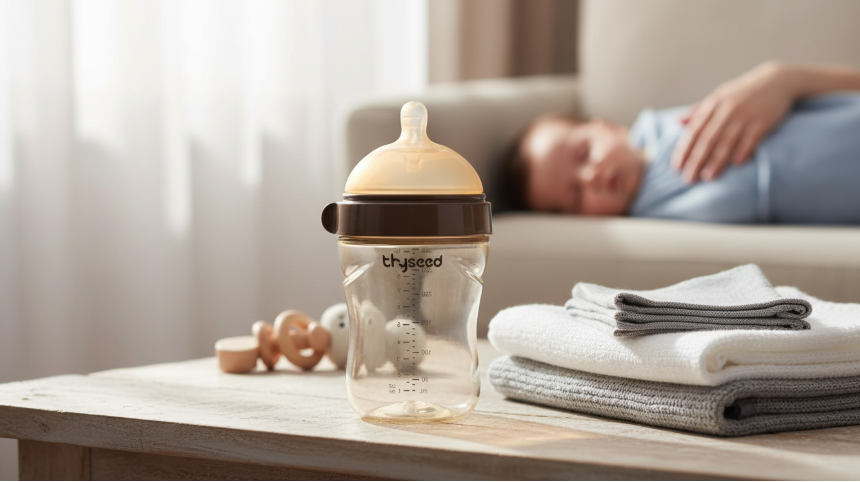
Best for Picky Breastfed Babies
The Thyseed PPSU bottle is often the secret weapon for babies who refuse traditional bottles. These anti-colic baby bottles are crafted from “golden standard” PPSU, a material that is safer than standard plastic and tougher than glass.
Short Verdict: The ultimate transition tool for babies who have a hard time moving away from nursing.
Key Features:
- Specialized 120-degree latch design mimics the natural angle of the breast.
- PPSU material withstands temperatures up to 356°F for deep sterilization.
- Dual anti-colic vents ensure smooth milk flow without air intake.
- Soft-touch silicone body allows parents to gently assist the flow.
| Pros | Cons |
| Mimics the warmth and feel of skin | Higher price point per bottle |
| Shatterproof and lightweight for travel | Only available in single packs |
| Excellent for wide areola encapsulation |
Who Should Buy: Families struggling with “bottle refusal” or those who want the safety of glass without the heavy weight or risk of breaking.
Real-Life Practical Insight:
The texture of this nipple is different from others; it has a matte, skin-like feel. This was the only bottle my picky daughter would accept after three months of exclusive breastfeeding.
Buying Guide: Choosing the Right Anti-Colic Bottle
Venting Systems and Cleaning
When comparing anti-colic baby bottles, you must choose between internal vents and nipple-integrated valves. Internal vents are usually more effective for severe colic but require more parts to wash. Nipple valves are part of the nipple itself, making them much faster to clean for busy parents.
Material Safety and Longevity
Standard plastic is affordable and light, but 2026 trends favor Glass and PPSU. Glass offers the purest feeding experience with no risk of chemical leaching. PPSU is a medical-grade plastic that is virtually indestructible and can handle the highest heat settings in your sterilizer.
Frequently Asked Questions
The first known baby bottle can be traced back to ancient clay vessels discovered by archaeologists that date back to several thousand years ago. These early feeding tools were often shaped like small animals with spouts and were used to provide supplemental milk to infants in ancient Greece and Rome.
A baby bottle is considered good when it successfully provides a consistent flow that matches the baby’s developmental stage while preventing the ingestion of air. It must also be easy to clean to prevent bacteria buildup and should be made of high-quality, non-toxic materials like borosilicate glass or BPA-free silicone.
Most parents find that having a set of six to ten baby bottles is the ideal amount to manage a full day of feedings comfortably. This quantity allows you to always have a clean, sterilized bottle ready for the next feed without feeling the pressure to wash dishes after every single session.
The best material for baby bottles is generally considered to be borosilicate glass or medical-grade PPSU due to their safety and durability. Glass is favored for its chemical-free purity and easy sterilization while PPSU provides a lightweight and shatterproof alternative that can withstand extremely high temperatures.
The best material for baby bottles is generally considered to be borosilicate glass or medical-grade PPSU due to their safety and durability. Glass is favored for its chemical-free purity and easy sterilization while PPSU provides a lightweight and shatterproof alternative that can withstand extremely high temperatures.