⭐⭐⭐⭐⭐Choosing the right baby activity center can help support your child’s physical development, sensory exploration, and independent play from the early months. The best activity centers grow with your baby, offer safe bouncing or standing support, and include engaging toys that encourage motor skills and curiosity. This comparison guide reviews three of the most popular baby activity centers to help you decide which one fits your baby’s age, space, and developmental needs.
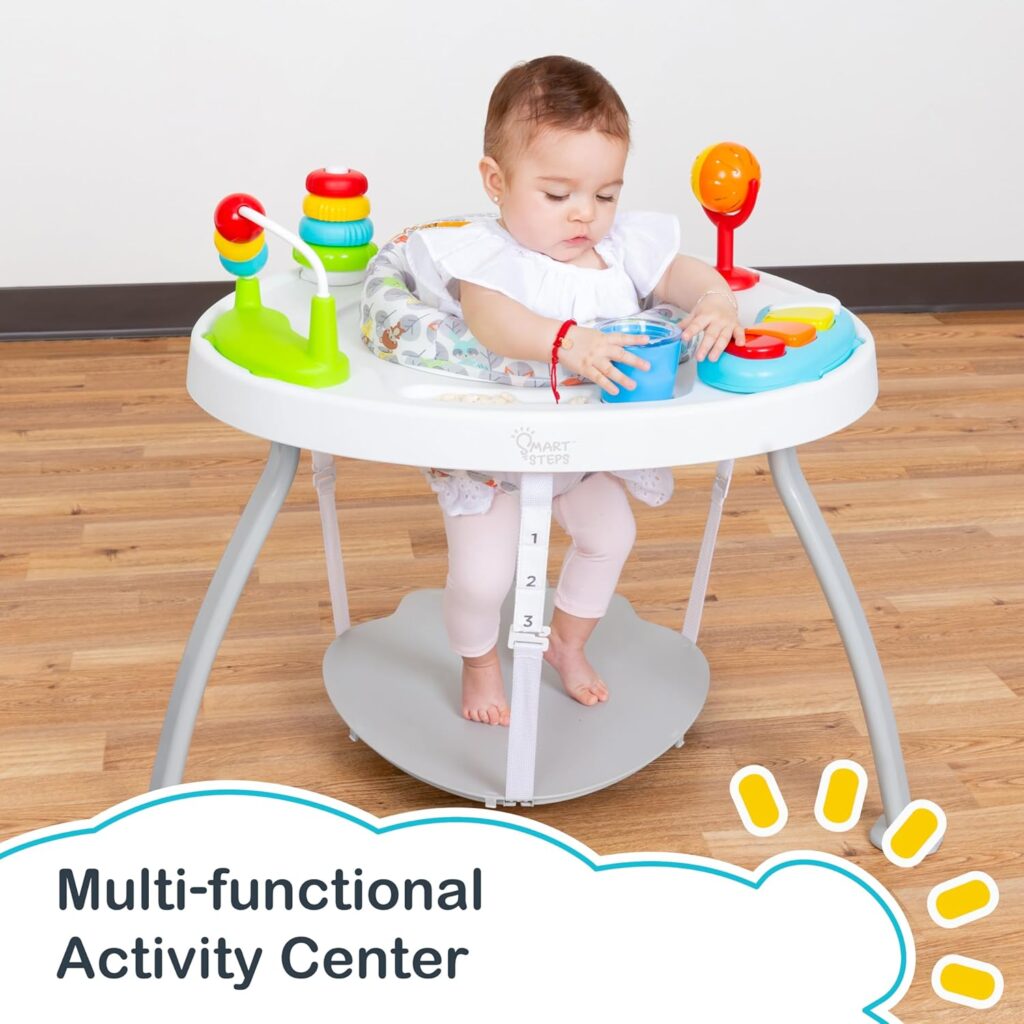
1. Smart Steps® Bounce N’ Play 3-in-1 Activity Center – Woodland Walk
Overview
The Smart Steps Bounce N’ Play 3-in-1 Activity Center is designed to adapt as your baby grows, converting from an activity center to a play table and then to a flat toddler table. It provides a secure and engaging environment for babies starting from six months, encouraging movement, coordination, and early play independence.
Key Features
This activity center includes a three-position bouncing board that supports different stages of leg strength and movement. The 360-degree rotating seat allows babies to explore toys from all angles while staying safely supported. A removable toy set with a musical keyboard adds sensory stimulation and can be used independently once your child outgrows the seat. Its design supports babies up to 15 months, making it a practical short- to mid-term developmental tool.
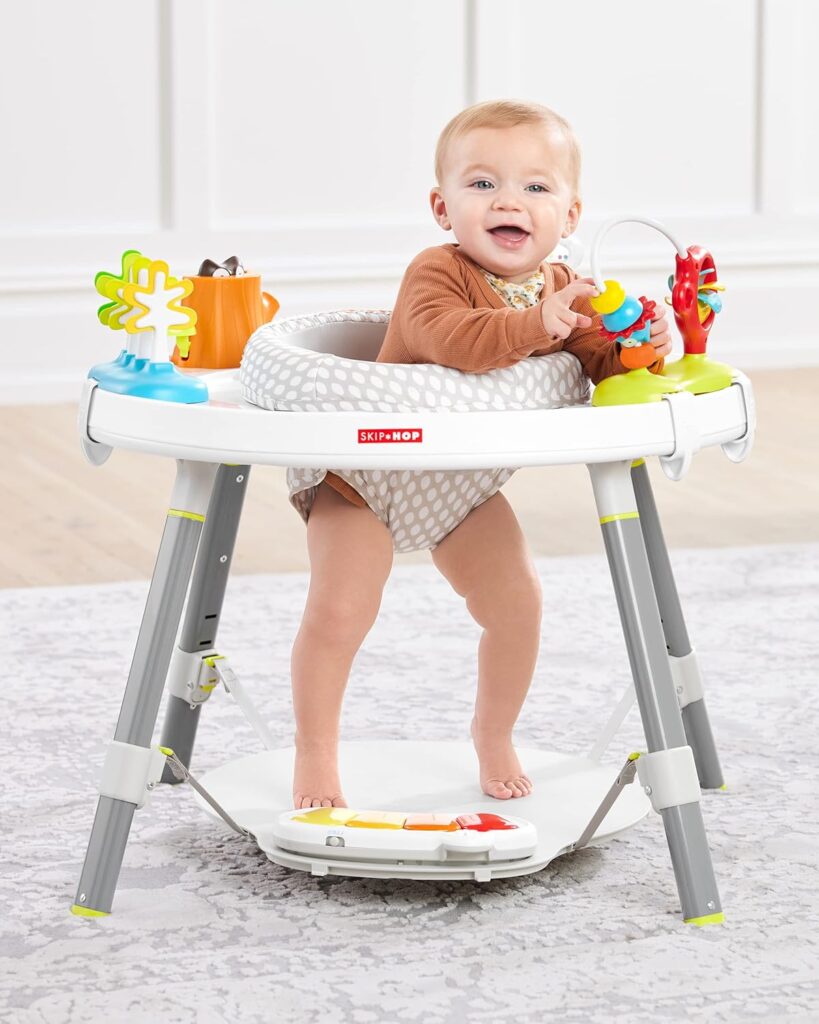
2. Skip Hop Explore & More Baby Activity Center (3-Stage Grow-With-Me)
Overview
The Skip Hop Explore & More Baby Activity Center is one of the most development-focused activity centers available, designed in collaboration with pediatric experts. It supports babies from around four months through toddlerhood with three distinct stages of play.
Key Features
This activity center grows with your child, starting with sit, swivel, and bounce play, transitioning into cruising and interactive play, and finally converting into a toddler play table. Over 25 developmental activities—including a light-up piano, motion-sensor toys, and a peek-a-boo owl—help improve sensory awareness and hand-eye coordination. The Discovery Window allows babies to see their feet while playing, reinforcing cause-and-effect learning. The adjustable foot platform ensures proper posture, while the washable seat and dishwasher-safe snack bowl simplify cleanup.
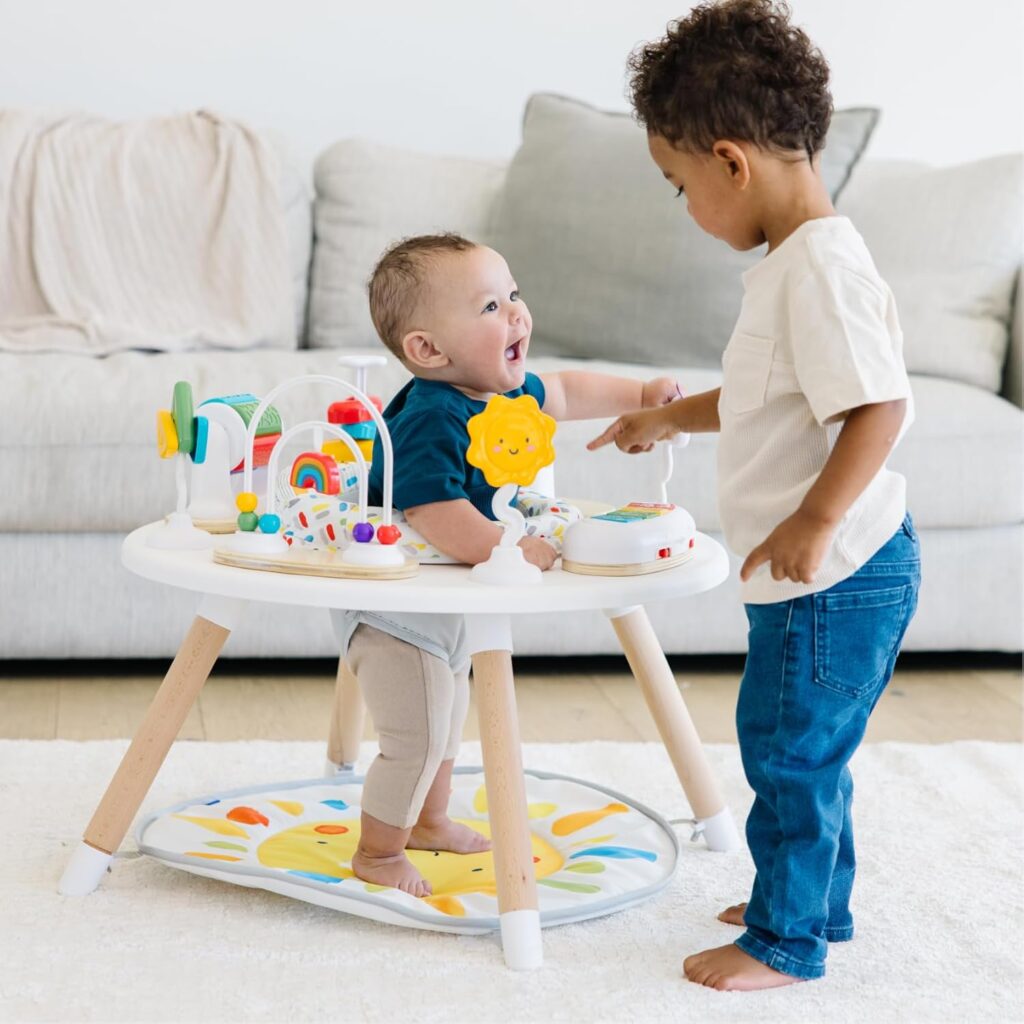
3. Move2Play 4-in-1 Baby Activity Center – Montessori Inspired
Overview
The Move2Play 4-in-1 Baby Activity Center focuses on Montessori-inspired play, combining modern aesthetics with long-term usability. Designed for babies from three months onward, it transitions through multiple developmental stages, including tummy time, supported play, and a toddler table.
Key Features
This activity center includes four play modes, making it suitable for early infancy up to toddler years. Eight removable Montessori-style toys promote motor skills, problem-solving, and tactile exploration. The interactive learning piano introduces sounds, colors, and letters with over 30 phrases and songs. Easy assembly, machine-washable fabric components, and a sleek wooden-leg design make it both parent-friendly and visually appealing for modern homes.
Comparison Table: Baby Activity Centers at a Glance
| Feature | Smart Steps Bounce N’ Play | Skip Hop Explore & More | Move2Play 4-in-1 |
|---|---|---|---|
| Starting Age | 6 months | 4 months | 3 months |
| Stages | 3 stages | 3 stages | 4 stages |
| Seat Rotation | 360° | 360° | Yes |
| Toy Count | Removable toy set | 25+ activities | 8 Montessori toys |
| Converts to Table | Yes | Yes | Yes |
| Design Style | Colorful & playful | Development-focused | Modern & minimalist |
Conclusion
Each of these baby activity centers offers unique advantages depending on your baby’s age, developmental stage, and your home setup. The Smart Steps Bounce N’ Play is ideal for parents seeking a simple, engaging center for mid-infancy. The Skip Hop Explore & More stands out for its research-backed developmental features and long usability. The Move2Play 4-in-1 is perfect for families who value Montessori-style learning and modern design with an extended lifespan. Choosing the right activity center can enhance your baby’s playtime while supporting healthy growth and exploration.
Frequently Asked Questions
A baby should sit upright with their feet flat or lightly touching the foot platform, not dangling or forced to tiptoe. The seat should support the hips and torso comfortably while allowing free movement of the arms and legs.
Most babies can safely use an activity center for short periods, usually 15 to 20 minutes at a time, once or twice a day. Extended use is not recommended as babies need floor time for crawling and free movement.
The ideal age to start using a baby activity center is typically between 4 and 6 months, when a baby has developed enough neck and head control. Some designs, like Montessori-inspired centers, allow limited use from around 3 months with proper support.
A 3-month-old can use certain activity centers only if the product specifically supports that age and provides proper head, neck, and torso support. Usage should be brief and supervised, focusing more on sensory interaction than standing or bouncing.